Weighing Up Ferragamo’s Crisp-Lined and Loose-Silhouette Handbag Shapes: A Closer Look
Across decades of work, Salvatore Ferragamo has perfected the vocabulary of Italian leather goods, and this mastery shows through most clearly in the tension between two contrasting design philosophies: the precise, architectural shaping of structured styles weighed alongside the loose, casual comfort of slouchy shapes.
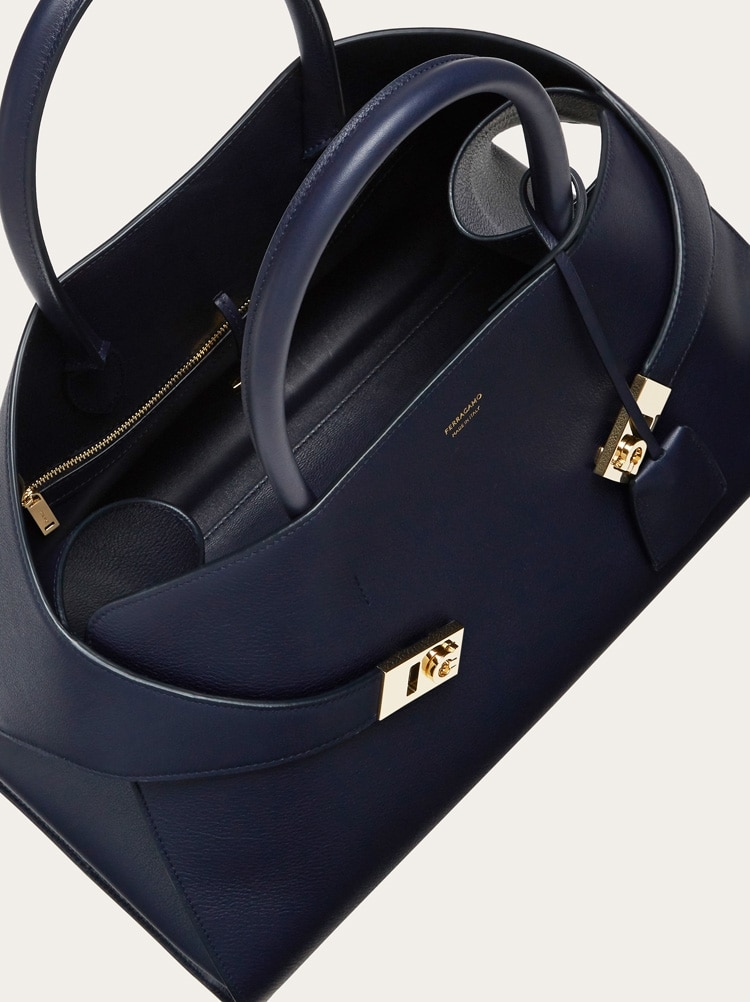
Shoppers scrolling through a Ferragamo shop today will notice that the house stays neutral between the two. Instead, it builds dual accessory ranges that run side by side, one rooted in architecture, the other in movement.
Grasping this distinction matters if you’re trying to choose a piece that will actually earn its keep in daily rotation rather than gather dust in storage.
Not merely a superficial trait, the divide between the two runs deeper. Structured bags are built around inner frameworks, stiffened panels, and precise stitching to hold a fixed shape no matter how much you stuff them with. Slouchier styles move in the other direction, using more supple leathers and less rigid tailoring so the bag folds and settles differently depending on how you tote it. These two philosophies are present within the latest Ferragamo bags collection, and both have dedicated admirers for reasons that couldn’t be more different. What follows dissects what sets them apart, where the construction differs, and which styles from the brand’s current catalogue align with each approach.
Decoding “Structured” Within Tailoring Terms
A boxy-construction Ferragamo bag generally begins with a rigid base, frequently strengthened by a sturdy panel or thick foam layer sewn between two layers of leather. It’s this feature that lets the bag hold its position on a surface, neither slumping nor caving in. The Ferragamo Studio bag, the most evident case in today’s collection, owes its boxy silhouette, crisp edges, and top handle entirely to this inner build. Take away the structural support, and the leather would lose its shape entirely, falling flat.
Hardware carries more weight in structured pieces than buyers realize. Because unsupported leather can’t handle recurring strain at one spot without warping or ripping eventually, metal frames, turn-locks, and reinforced handle attachments all need a sturdy body to be secured to. Structured bags from Salvatore Ferragamo tend to feature more substantial closures for this https://feragamoshop.com/tote-bags/ reason, whereas slouchy styles lean instead on zips or magnetic snaps that don’t require the same anchoring strength.
The choice of leather varies too. Structured designs generally use full-grain leather or lightly corrected hides that maintain a fold line precisely where it’s cut, lending a clean, sculptural-looking edge. That’s one reason structured bags come out looking so consistent in photos — its form remains steady across images, which is significant for a Ferragamo shop that wants to represent a product faithfully on its site. Weight is the compromise here; structured bags typically come in heavier than their slouchy alternatives owing to the reinforcement built inside them.
On top of that, structured-silhouette bags are inclined to keep their secondhand value more predictably. Since the form doesn’t degrade the way supple leather tends to sag or crease over time, a structured Salvatore piece bought now is better positioned to appear well-kept in five years with basic care. This is a sensible point to weigh for anyone treating a Ferragamo bag as a durable, long-range purchase rather than a seasonal purchase.
The Reason Behind a Slouchy Cut Wins: Comfort, Tactile Ease, and Practical Wearability
Stiffness gets traded for comfort in softly structured bags, and this exchange brings tangible upsides. A softer hide, typically napa or a faintly textured calfskin, shifts along with the wearer’s movement rather than resisting it, which is why slouchy hobo and shoulder styles remain popular for the daily commute. The Ferragamo Wanda, especially in its softer forms, is a clear example of this — it expands to hold more without looking overstuffed, since the leather is designed to give rather than resist.
How weight is distributed is altered with a slouchy build as well. Because there’s less internal hardware and stiffening material, these bags are frequently lighter, which matters over an eight-hour workday when a bag stays on one shoulder. Those comparing the best Ferragamo bags for travel tend to favor relaxed, unstructured designs precisely since they flatten somewhat to be packed within carry-on luggage without holding a rigid, bulky form.
The style-driven reasoning carries weight too. Relaxed, unstructured bags register as more low-key and less loudly branded, which works well for buyers who want their Salvatore Ferragamo bags to melt into everyday outfits rather than draw obvious notice. This casual drape is especially suited to denim, tailored trousers, and other looks where a stiff, angular bag would feel visually at odds with the overall ensemble.
One thing worth noting is a durability consideration that’s best discussed openly. Soft leather is more prone to visible creasing and surface wrinkles with extended use, especially if it’s frequently stored without stuffing or not stored with care. It shouldn’t suggest it deteriorates more quickly structurally speaking, but the appearance will evolve to a greater degree than a firmer-bodied bag. Anyone wanting a soft-shaped bag to look nearly new after years of use need to take extra care in filling it with tissue paper during storage.
Putting the Two Approaches Next to Each Other
So the distinction feels less abstract, it’s useful to look at how structured and slouchy Ferragamo bags usually differ across the factors that matter most to a real buyer: shape retention, weight, everyday flexibility, and how they age.
| Point of comparison | Structured Styles | Relaxed Styles |
|---|---|---|
| Shape retention | Maintains a fixed silhouette regardless of what’s inside | Shape moves depending on its contents and carrying style |
| Usual load | Heavier due to inner structuring | Lighter, more comfortable for all-day wear |
| Best use case | Office settings, formal events, pared-down closets | Travel, relaxed day-to-day use, outfits built in layers |
| Wear patterns | Keeps sharp lines through extended use | Takes on soft creasing; wear that adds personality |
| Metal detailing | Bolder clasps, frames, and fastenings | Simpler zippers or magnetic closures |
| Care demands | Low — the form holds on its own | Needs filling to avoid set-in folds |
No single option outranks the other; the right choice depends mostly on real everyday habits with the bag. Those driving to a formal workplace tend to lean on structured pieces more often, while those who travel often or ride public transit tend to tire less with a slouchy style over time.
Making Sense of the Current Ferragamo Bags Lineup Summary by Grouping
Surveying the current Ferragamo bags overview, the brand structures its offering loosely into three functional tiers: top-handle pieces with firm structure for formal settings or office wear, shoulder and crossbody designs that balance rigidity and relaxation, and entirely soft hobo silhouettes designed for roominess and comfort. This tiered approach means someone shopping can switch styles as the occasion demands without leaving the brand’s ecosystem entirely.
Ferragamo’s precision-driven craft shows up at its clearest in the top-handle category. Sharp-cut edges, balanced, even stitching, and hardware matched precisely to the leather tone often echo the exactness of Ferragamo’s shoes. This is why, these bags frequently top any shortlist of the best Ferragamo bags for professional settings, given its reliable silhouette across desks and meeting rooms.
Positioned between rigidity and ease, crossbody pieces are possibly the most adaptable choice in the current lineup. Their semi-structured build keeps form intact when worn close, while the panels and strap offer just enough flex to stay from looking rigid. As a result, this tier is often counted among the top Ferragamo bags for anyone wanting a piece that’s both photogenic and practical enough for a full day of errands.
Rounding out the collection are soft-form hobo and tote designs, the tier in which Ferragamo leans hardest into soft leather sourcing. With larger panels and fewer seams, firmness eases while the leather’s character shines through, as minimal stitching keeps focus on the leather. Buyers comparing the best Salvatore Ferragamo bags across categories will likely find this softer tier leads in comfort but falls behind in formal-occasion versatility.
Picking the Right One of the Two for Actual Daily Use
Instead of consulting your aspirational picks, the wisest approach to decide is to audit your real week. Count how many days you’re seated at a desk versus moving between locations, and admit whether you’re the kind of person who empties a bag nightly or keeps it packed for weeks at a stretch. Structured bags reward consistency and steady, foreseeable use; soft-shaped bags reward flexibility and forgive irregular habits.
Budget also plays into this decision indirectly. Because structured bags require more components — internal stiffening, reinforced hardware mounts, exact panel construction — they often demand more labor hours in production, which can be seen in how comparable sizes are priced by a Ferragamo shop across both categories. This isn’t a hard rule, but it’s a pattern worth noting if price weighs into the decision alongside aesthetics.
Climate and regional habits matter more than most buyers expect. In damp, moisture-heavy climates, softer slouchy leathers can take on more dampness and need more upkeep, while structured bags with finished or sealed leather sections tend to resist environmental wear slightly better. Anyone shopping ferragamo bags for year-round use in a variable climate should factor this into the decision rather than deciding on looks alone.
At the end of the day, plenty of Ferragamo owners eventually acquire one of each — a structured bag reserved for formal or unpredictable moments, and a slouchy piece for daily life that doesn’t need to perform under scrutiny. That pairing reflects how the brand itself designs its collections: not through a single design lens, but as a pair of consistent responses to two separate everyday needs, each carried out with the same enduring devotion to Italian leathercraft that has defined Salvatore Ferragamo since its founding.
Leave a Reply